Hiring bias has never been a loud, visible problem. It has always been a silent bug in the system. It persisted not because companies intended to be unfair, but because decisions were influenced by organizational culture, leadership preferences, familiarity bias, and behavioral comfort zones.
Many of these factors were never directly related to job performance, yet they continued to shape hiring outcomes. As long as a candidate could do the job, many of these filters should not have mattered, but they did. That gap between job competency and hiring decisions is where bias quietly lived, and where hiring systems needed to evolve.
The Baseline Nobody Wants to Audit
Before evaluating what AI does to hiring, it is worth being precise about what traditional hiring actually does –
- The average recruiter makes a preliminary judgment on a resume within six seconds.
- Structured decision criteria are rarely applied consistently across a full candidate pool.
- Interview questions vary from candidate to candidate depending on where the conversation goes.
- Notes are partial, impressionistic, and written after the fact.
- Final decisions are frequently made in debrief rooms where the most senior voice carries disproportionate weight and recency bias determines whose read of a candidate sticks.
Research from SHRM puts the average cost-per-hire at approximately $4,700. Many organizations estimate the true cost of a mis-hire, factoring in onboarding, management bandwidth, and eventual rehiring, at somewhere between $50,000 and $240,000 depending on the seniority of the role. A 2023 study found that hiring bias costs U.S. employers roughly $64 billion annually. And 48% of HR managers, when surveyed directly, admit that bias influences their hiring decisions.
These are not edge-case numbers. They are the operating costs of a system that most organizations have not seriously redesigned in decades.
The bias in hiring is not primarily a product of prejudiced individuals. It is a product of unstructured processes. When you give evaluators no consistent framework, no shared criteria, no mechanism for calibration, you do not get objective assessment.
You get a collection of individual impressions that correlate more strongly with familiarity and social comfort than with job-relevant competency. That is what unstructured interviewing produces. Not always. But consistently enough that the data is hard to argue with.
From Gut Feel to Data: How AI Interview Technology Is Rewriting the Rules of Fair Hiring
The premise behind AI-backed hiring is straightforward: if bias enters through inconsistency, then consistency is the intervention. If bias is amplified by time pressure, then removing the operational bottleneck reduces the pressure under which shortcuts get made. If interviewers cannot reliably compare candidates evaluated at different times in different conversations, then standardizing the evaluation creates a comparable dataset.
None of this is technologically exotic. What is new is the ability to deliver it at scale.
Structured interviewing has been the gold standard in talent assessment research since the 1980s. Meta-analyses consistently show it outperforms unstructured approaches in predicting job performance, in some studies by a factor of two. The problem has never been the concept. It has been adopted.
Getting a hiring manager to build a competency framework, develop scoring rubrics, and apply them consistently across 200 candidates for a high-volume role is simply not realistic without structural support. AI provides that support.
Asynchronous AI screening removes the scheduling friction that compresses judgment. Standardized question sets ensure every candidate is evaluated on the same dimensions. Automated scoring against validated competency rubrics replaces the undocumented impression. And a structured output gives decision-makers something they almost never have in traditional hiring: comparable data.
The shift from traditional to AI-backed hiring is, at its core, a shift from subjective impressionism to structured evidence. That does not mean AI makes better decisions than humans. It means AI creates the conditions under which humans can make better decisions than they typically do on their own.
The Role of Digital Interview Avatars
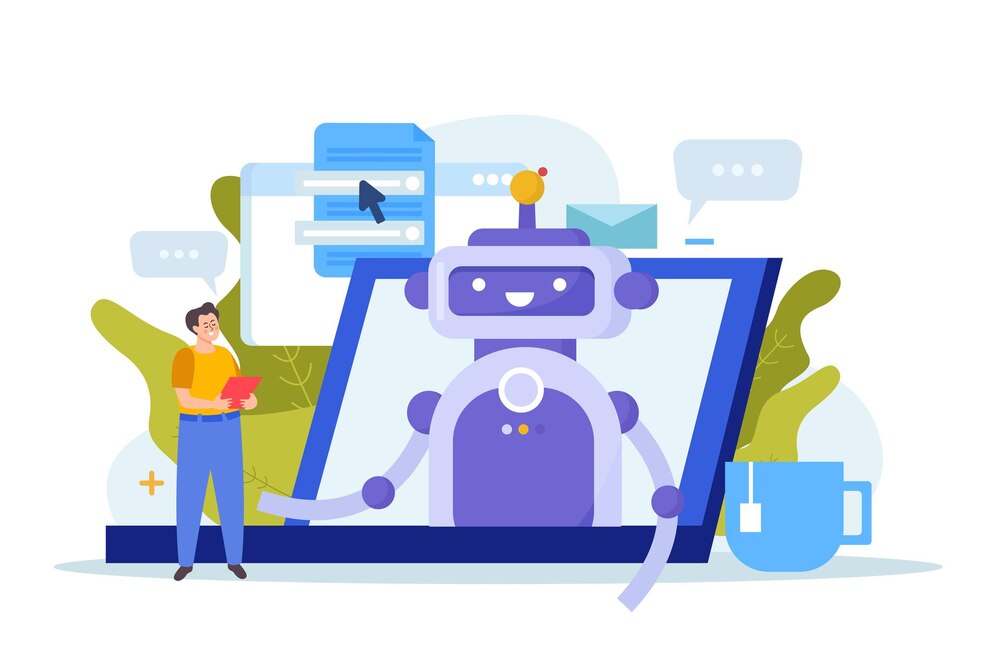
The technology worth highlighting specifically is the emergence of AI-powered digital avatars as standardized first-round interviewers. This might have drawn some skepticism, which reflects a misunderstanding of what the technology is doing.
The objection typically goes: replacing a human interviewer with an AI avatar removes the human element from a fundamentally human process. That objection has merit if the alternative is a well-trained, well-calibrated human interviewer operating with full structured guidance and consistent application of agreed criteria. In that context, an avatar offers limited additional benefit.
What often gets missed in this conversation is what the real alternative looks like. In most high-volume hiring environments, the alternative is not a perfectly structured human interview. It is a recruiter trying to complete 40 phone screens in a week, asking slightly different questions each time, capturing feedback inconsistently, and making shortlisting decisions under deadline pressure.
This is where structured AI interviews create value. An AI interviewer that asks every candidate the same questions, in the same sequence, evaluated against the same validated rubric, does not remove the human element from hiring. It removes the variability that unintentionally influences decisions. It ensures that the first layer of evaluation is consistent, documented, and job-relevant before a human recruiter even steps in.
Structured interviews are standardizing the part of the process where inconsistency, bias, and time pressure have historically had the most influence. Human decisions still happen, but they happen on a more structured, more comparable, and more evidence-based candidate pool.
The avatar does not decide who gets hired. It produces structured, comparable intelligence that humans use to make that decision. The meaningful human judgment, the one where experience and insight genuinely matter, is applied to a shortlist built on evidence rather than a shortlist built on whoever was easiest to schedule.
Where This Is Heading
The broader transition from traditional to AI-backed hiring is not a future scenario. It is happening now, across organizations of every size, in every industry. Approximately 87% of companies have already deployed some form of AI hiring tool. The question is no longer whether AI will be part of the hiring process. It is whether organizations are using it with enough structural rigor to capture its fairness benefits rather than simply automating the problems they already have.
For talent acquisition leaders navigating this transition, a few principles are worth holding onto.
AI tools should be audited for disparate impact before they go live, and on a regular basis thereafter. Competency frameworks should precede technology selection. An AI scoring system is only as fair as the criteria it is scoring against. If those criteria have not been validated against job-relevant performance data, the structure is cosmetic.
Human-in-the-loop design is not a feature. It is non-negotiable. AI should surface candidates. Humans should advance them. Any system designed to make autonomous hiring decisions without meaningful human review has fundamentally misunderstood what the technology is for.
And finally, the goal of AI in hiring is not to remove human judgment. It is to give human judgment something better to work with than gut feel and a half-remembered interview from three weeks ago.
Traditional hiring has had a long run. It has produced some remarkable talent. It has also systematically excluded enormous numbers of qualified candidates based on criteria that have nothing to do with their ability to perform in a role. The industry knows this. The data has been clear for a long time.
AI interview technology does not solve that problem by itself. But it offers something that the traditional process, for all its familiarity, never could: a consistent, auditable, structured evaluation environment in which what a candidate can do carries more weight than how they happen to come across.
That is a meaningful improvement. And after 25 years of watching organizations make the same structural mistakes, I would rather see them make new ones on a better-designed system than continue refining a process that was never built to be fair.
How JobTwine AI interviews change the equation –
By design, JobTwine shifts the first layer of evaluation away from subjective impressions and toward measurable competencies. Every candidate is assessed through the same structured questions, aligned to role-specific skills, and evaluated against a consistent, validated rubric. There is no room for variation based on how someone speaks, where they come from, or how closely they match a recruiter’s unconscious preferences.
What this does in practice is simple but powerful. It strips out bias-loaded assessment signals and replaces them with skill-based evidence. Instead of optimizing for “who felt right in the conversation,” teams start shortlisting based on who demonstrated the right capabilities for the role.
The result is a hiring funnel that is more defensible, more consistent, and far more aligned to actual job performance. Bias does not disappear overnight, but it is significantly constrained at the stage where it has historically had the most impact.
JobTwine does not just make interviews faster. It makes them fairer by ensuring that competency, not perception, becomes the foundation of every hiring decision.